
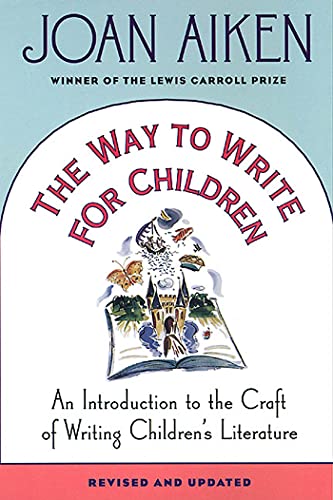
The way to write for children / Joan Aiken
Material type: TextPublication details: New York : St. Martin's Griffin, 1999Edition: 1st St. Martin's Griffin ed., rev. and updatedDescription: 97 p. ; 21 cmISBN:
 - 031220048X (pbk.) :
- Subtitle on cover: Introduction to the craft of writing children's literature
| Cover image | Item type | Current library | Home library | Collection | Shelving location | Call number | Materials specified | Vol info | URL | Copy number | Status | Notes | Date due | Barcode | Item holds | Item hold queue priority | Course reserves | |
|---|---|---|---|---|---|---|---|---|---|---|---|---|---|---|---|---|---|---|
 Main
Main
|
RTC Library Main opac | Main TEST | 809.89 AIK | Available | 30010557 |
ch. 1. Do you want to write about children or for them? Adults and children read in different ways -- ch. 2. Warning: writing for children may not be as simple as you think. Why do people write for children? What should a children's writer write, or not write? -- ch. 3. Different age groups. Small children's books -- ch. 4. Novels for children of medium age. Writing routine. voice. Your imaginary reader. your central character. Story-telling or describing. Assembling your story. Getting started -- ch. 5. Plots for the small to medium. How do you get your ideas? themes. Building the reader's interest. Beginning. Keeping them interested. Ending -- ch. 6. Character. How are characters created? Extending you characters. Depicting them. Villains. Dialogue. Dialect. Details -- ch. 7. Writing for television. Children's plays. Picture-books. Poetry. Teenage novels -- ch. 8. Myth and fantasy. Ghost stories. Humour. Historical novels -- ch. 9. Practical points. Moral message, yes or no? Taboos. Final advice