
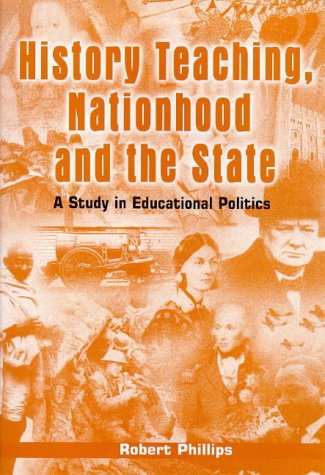
History teaching, nationhood, and the state : a study in educational politics / Robert Phillips
Material type: TextPublisher: London [England] ; Herndon, VA : Cassell, 1998Description: 151 pages ; 25 cmContent type:
 - text
- unmediated
- volume
- 0304702986
- 0304702994
- 9780304702985
- 9780304702992
- 370
| Cover image | Item type | Current library | Home library | Collection | Shelving location | Call number | Materials specified | Vol info | URL | Copy number | Status | Notes | Date due | Barcode | Item holds | Item hold queue priority | Course reserves | |
|---|---|---|---|---|---|---|---|---|---|---|---|---|---|---|---|---|---|---|
 Main
Main
|
RTC Library Main opac | Main TEST | 370 PHI | Checked out | 22/05/2026 | 30012291 |
Includes bibliographical references (pages 136-148) and index
Chronology of History in the National Curriculum: 1989- 1995 1. The Battle for the Big Prize: History Teaching, the State and Policy in the Late Twentieth Century 2. History, History Teaching and the Shaping of a Pedagogic Discourse 3. Discourse of Derision: The New Right and History Teaching 4. Competing Discourses? History, Empathy and Politics in the 1980s 5. 'Making History': The National Curriculum History Working Group and the Interim Report 6. 'Re-Making History?': Towards the Final Report 7. 'Contesting History': The Response to the Final Report 8. 'The End of History?': The NCC, Clarke and the Statutory Orders 9. 'Slimming History': Implementation, Dearing and Reform 10. Conclusion: Contesting the Past in the Future: History, Nationhood and the State in the Twenty-First Century.
"Robert Phillips' new book examines the politics of what has become known as the great history debate. Beginning with debates over the teaching of history in the 1960s and 1970s, Phillips traces the politics of history teaching through to the present day. Particular attention is paid to the creation of history in the National Curriculum, using previously unpublished interviews with former Secretaries of State for education and civil servants to shed new light on one of the most contentious reforms of the period."" ""An appreciation of why history teaching has provoked such controversy permeates the book. Phillips dwells throughout upon history's role in the transmission of cultural heritage and in cultivating a sense of national identity. He shows the way in which, as we approach the new millennium, these debates about the aims and purpose of history are closely connected with future visions of Britishness. This unique and highly accessible account is, therefore, likely to appeal not only to teachers and academic historians, but also to those interested in the cultural and educational politics of the period."